At Taylor Tennis Courts, we’ve been building and resurfacing courts across Southern California for close to five decades. Over the past few years, we’ve seen an incredible rise in the popularity of pickleball — and with that comes a greater need to keep these courts in top condition.
If your pickleball court is starting to show signs of wear — fading color, surface cracks, or uneven bounce — it’s probably time for resurfacing. As experts who’ve been building and maintaining courts since 1980, we can tell you this: resurfacing is the most cost-effective way to extend the life of your court, improve player safety, and restore that like-new playability.
In this guide, we’ll walk you through exactly what resurfacing involves, why it matters, which materials are best, and how to keep your court looking great for years to come. Whether you’re a homeowner, a school, or a city looking to refresh your facility, we’ve got you covered with everything you need to know—straight from the pros.
Why Resurfacing Matters
Pickleball courts, like any outdoor surface, take a beating over time. UV exposure, rain, daily play, and temperature swings can all contribute to surface wear, fading, and cracking. If ignored, even small imperfections can grow into major hazards that impact player safety and interfere with the way the ball plays.
A well-timed resurfacing helps correct these issues, evens out the surface, and restores proper texture and color. Think of it as a tune-up for your court — essential maintenance that keeps things safe, playable, and looking sharp.
Choosing the Right Surface
Most pickleball courts are built on asphalt or concrete and then surfaced with an acrylic coating system designed specifically for sport courts. While there are other materials out there — including rubber or turf systems — we recommend tried-and-true acrylic surfacing for both performance and longevity.
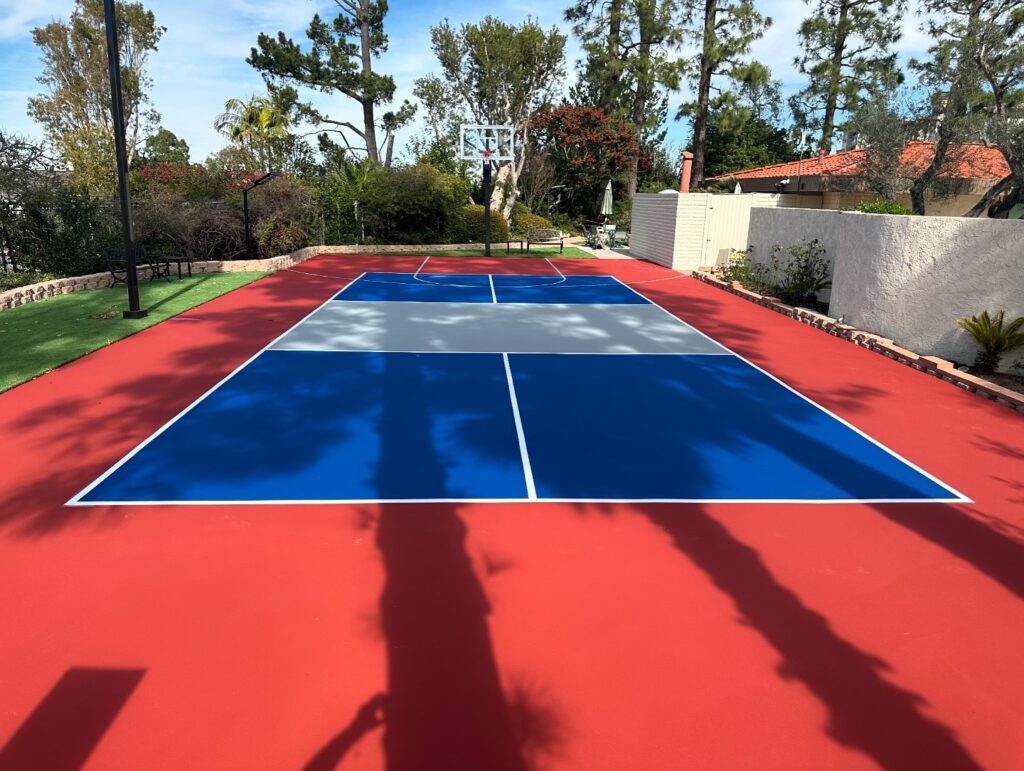
This system provides the right amount of cushion and traction while holding up well under Southern California’s sun and frequent use. It also gives you the flexibility to choose your color scheme and line markings — whether you’re resurfacing a dedicated pickleball court or converting an old tennis or basketball court.
What the Resurfacing Process Looks Like
Every court is different, but the general process includes:
- Inspection and Cleaning: We begin with a thorough assessment of the court’s condition. Power washing removes built-up dirt, grime, and loose materials.
- Crack Repair & Patching: Any structural issues, like cracks or low spots, are filled or repaired to ensure a level base.
- Acrylic Coating System: We apply multiple coats of sport surfacing material, with texture and pigment mixed in to achieve the proper grip and finish.
- Line Striping: Finally, we paint in regulation pickleball lines (and tennis lines if needed for shared-use courts).
Depending on the condition of your court and weather conditions, the entire process typically takes a few days to complete.
Court Maintenance Tips
After your court is resurfaced, regular upkeep can help it last for years to come. Here are a few tips:
- Keep it Clean: Sweep or blow off debris regularly, especially leaves or sand that can break down the coating over time.
- Watch for Standing Water: Puddles can signal low areas and may lead to long-term damage if not addressed.
- Address Damage Early: Don’t ignore cracks, fading, or peeling — these small issues can be repaired quickly before they become larger (and more expensive) problems.
Trust the Pros
Resurfacing a pickleball court isn’t a DIY weekend project. It takes the right materials, equipment, and — most importantly — experience.
At Taylor Tennis Courts, we’ve been in the business since 1980. We’ve seen just about every court condition you can imagine, and we know what it takes to bring them back to life. Whether you’re a homeowner, club manager, or city planner, we’ll help you get the most out of your court for years to come.
Ready to resurface your pickleball court? [Contact us here] to get a quote or learn more about the process. We’re always happy to talk shop.